
SAHS
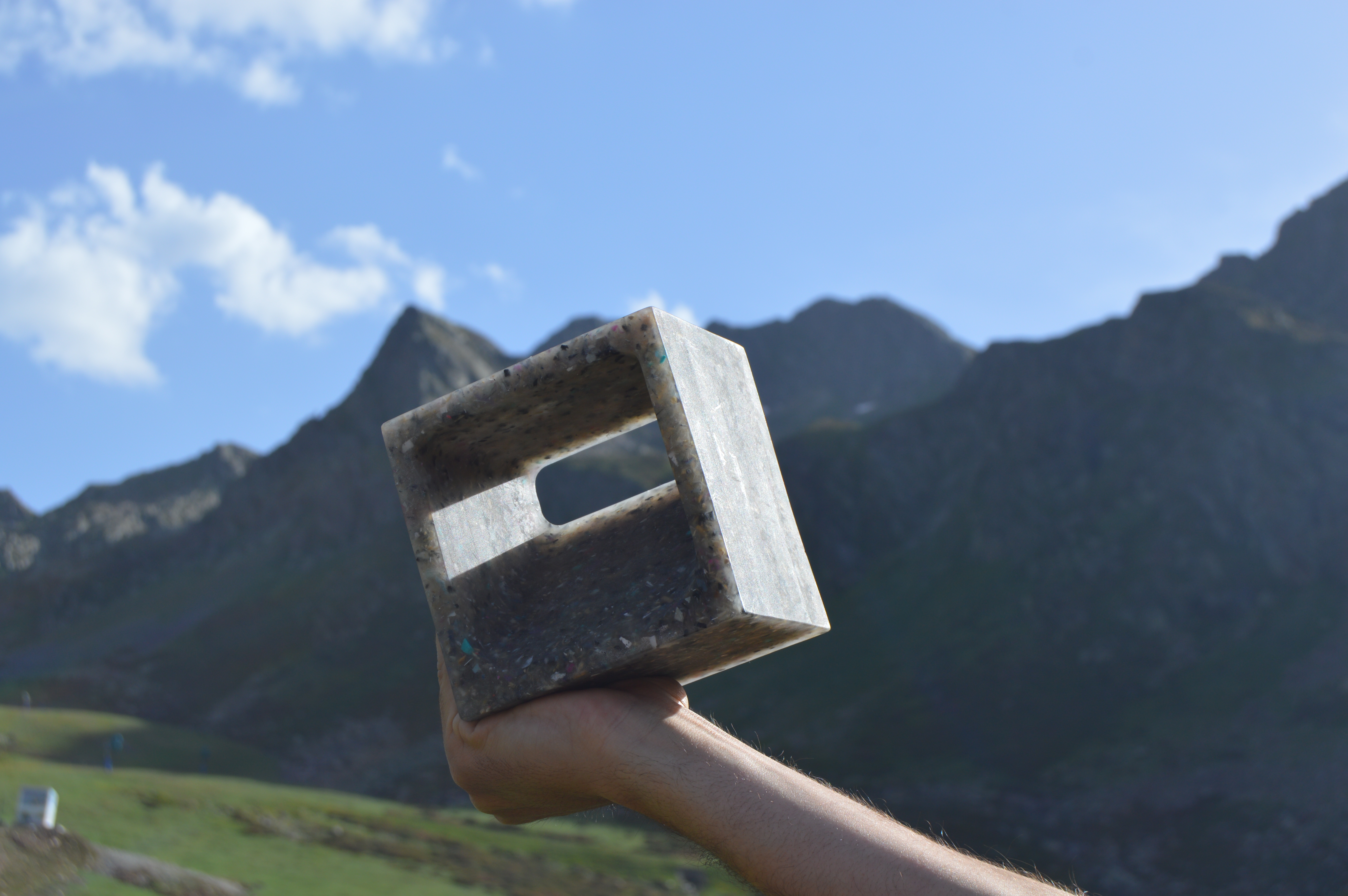
## Reto SAHS is an industrial design project developed as a Master’s Thesis within the Master’s degree in Industrial Design Engineering at ELISAVA. The project explores the transformation of defective factory skis from Rossignol into a new material for architectural applications. These skis are complex industrial waste, composed of fibres, resins, metals, wood and polymers, which makes their conventional recycling difficult. Through theoretical research and material experimentation, SAHS investigates how shredded ski waste combined with epoxy resin can become a material with functional, aesthetic and symbolic value. Rather than hiding the origin of the waste, the project preserves its textures, imperfections and fragments, maintaining its connection to snow, mountain culture and alpine landscapes. The result is a modular product concept for interior spaces, designed to interact with light, transparency and material presence, giving discarded skis a new architectural identity. ## Proceso The project was developed through theoretical research, material experimentation and prototyping. I started by analysing defective factory skis as a complex industrial waste stream, studying their multilayer composition and the difficulties of conventional recycling. The skis were then shredded and separated into different material fractions with the support of LLORENS GMR. From there, I tested how the ski fragments could be combined with epoxy resin to create a new material. Key decisions focused on preserving the identity of the original waste instead of hiding it: keeping visible fragments, textures, imperfections and the visual connection to snow, mountain culture and alpine environments. The final direction was to apply the material to a modular architectural product for interior spaces. ## Resultado The result is SAHS, a modular product concept made from shredded defective skis and epoxy resin, designed for architectural and interior applications. The project proposes a new way of giving value to a difficult-to-recycle composite waste by transforming it into a material with functional, aesthetic and symbolic qualities. The final outcome explores transparency, light, material presence and modularity, turning discarded skis into a new spatial element with its own identity. The main learning was understanding how waste can become a design opportunity when approached through material research, experimentation and a clear conceptual narrative. The next steps would be to further develop the material formulation, improve scalability and test its technical performance for real interior applications.
Tutores
Jessica Fernández
Colaboradores
Uneco per proporcionar el material, Rossignol per la matèria prima (esquís) i Llorens GMR per ajudar-me en el procés